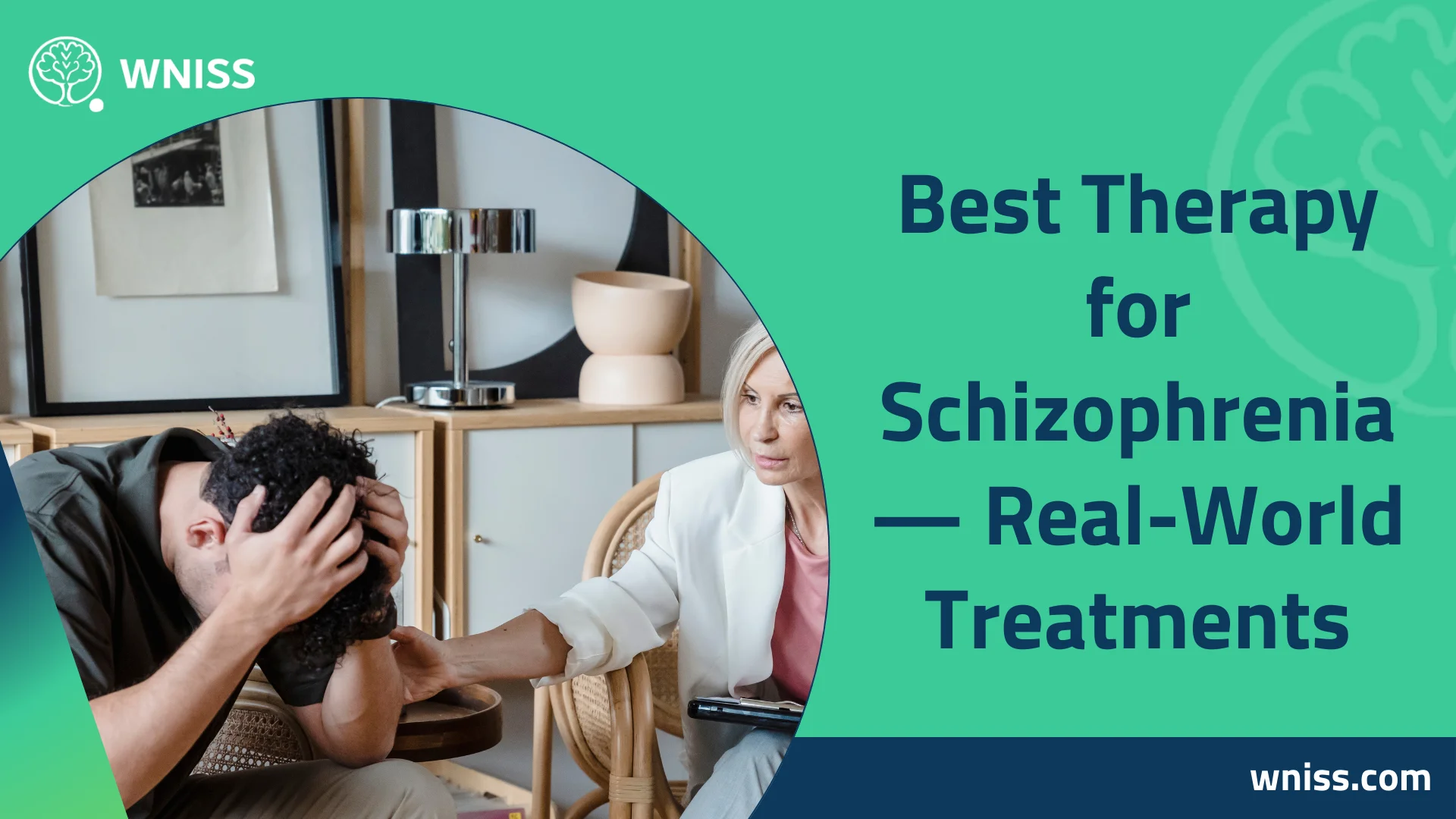
Medication matters for most people with schizophrenia—but therapy changes how life feels and functions. The best therapy for schizophrenia focuses on reducing distress from voices and beliefs, improving communication and problem-solving, and strengthening attention and memory for work or school. This guide explains CBT-p, family intervention, social skills training, and cognitive remediation, plus how coordinated specialty care pulls everything together—online or in person.
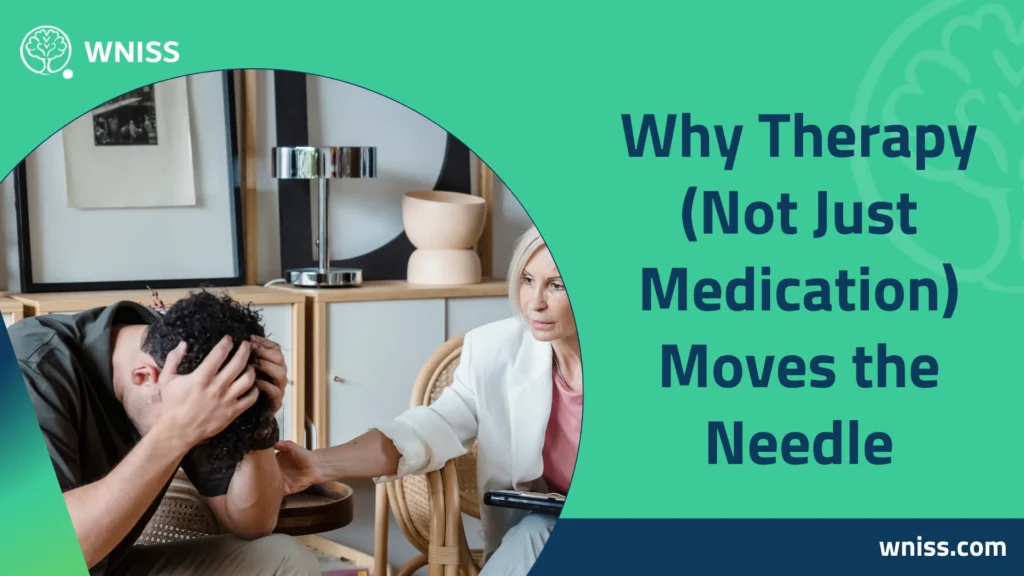
Why Therapy (Not Just Medication) Moves the Needle
Symptoms are more than biology; they’re experiences shaped by stress, habits, and support. Therapy targets what medication doesn’t fully reach—distress, confidence, and daily skills:
- Reduce distress from voices/delusions: CBT-p reframes meanings and tests predictions safely.
- Strengthen functioning: skills for conversation, planning, and problem-solving translate to independence.
- Protect against relapse: family education and early-warning plans catch flare-ups sooner.
- Build self-efficacy: practicing coping tools restores a sense of agency—crucial for recovery.
CBT for Psychosis (CBT-p) — Skills for Voices, Beliefs, and Avoidance
CBT-p is collaborative and non-confrontational; it works with your experience, not against you:
- Map triggers and appraisals: identify when distress spikes and what thoughts fuel it.
- Behavioral experiments: gently test predictions to loosen rigid beliefs without confrontation.
- Coping menus for voices: distraction, dialogue management, and attention-shifting techniques you can use anywhere.
- Graded exposure to avoided tasks: rebuild confidence step by step with successes that compound.
Family Intervention — Turn Home into a Recovery Ally
Families can be powerful partners when they have tools. Education and communication training reduce conflict and relapse:
- Shared understanding: what symptoms mean, what recovery looks like, and how to respond during spikes.
- Communication skills: brief, clear requests; validation; problem-solving without criticism.
- Early-warning playbook: agreed steps when sleep drops, anxiety rises, or suspiciousness spikes.
- Boundary and self-care plans: protect both the person in treatment and caregivers from burnout.
Social Skills Training (SST) and Cognitive Remediation — Functioning Gains You Can Feel
Recovery is measured in days that work. SST and cognitive remediation build the muscle for school, work, and relationships:
- SST rehearsals: conversation starters, assertiveness, conflict repair, and planning next steps.
- Cognitive remediation: therapist-guided exercises for attention, memory, and processing speed; improvements spill into daily tasks.
- Supported employment/education (SEE): rapid job/education support aligned with your goals, not generic placements.
- Habit scaffolds: calendars, reminders, and environment tweaks so skills show up when you need them.
Coordinated Specialty Care (CSC) — Integrating the Pieces Early
For first-episode psychosis, CSC blends psychiatry, therapy, family work, and SEE. Starting early multiplies benefits:
- Team-based plan: prescriber + therapist + family specialist + vocational coach.
- Stepwise goals: symptom relief → routine stabilization → school/work participation.
- Measurement culture: shared dashboards for sleep, symptoms, and role functioning.
- Tele-options: video sessions for therapy/family meetings when travel or anxiety is a barrier.
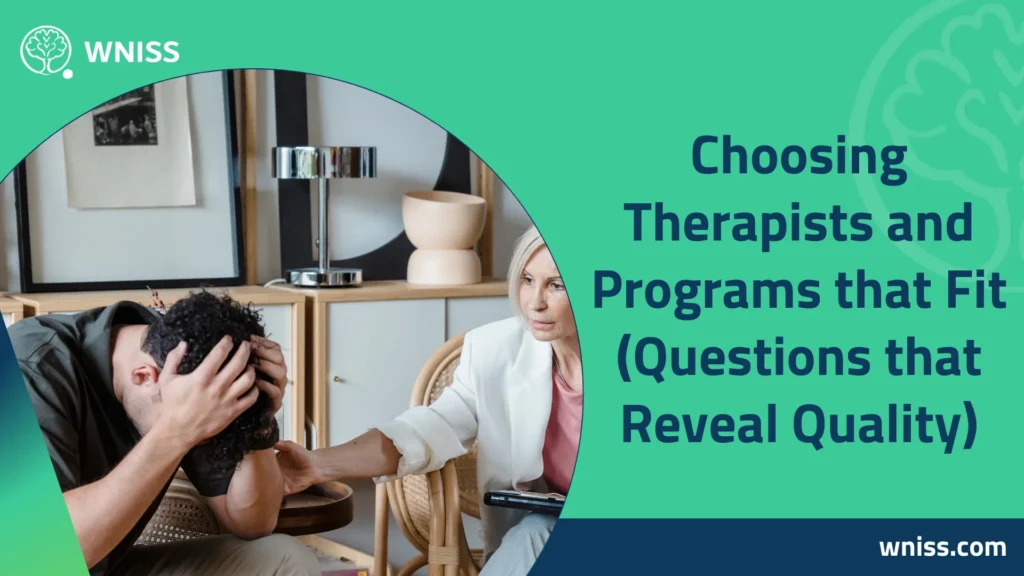
Choosing Therapists and Programs that Fit (Questions that Reveal Quality)
Clarity beats charisma. Use targeted questions to separate strong care from slogans:
- Experience: “How often do you deliver CBT-p and family sessions for psychosis?”
- Structure: “What does a typical 12-week plan look like—sessions, homework, goals?”
- Measurement: “How will we track progress and adjust if something isn’t working?”
- Function focus: “How will therapy support my school/work goals this month?”
- Coordination: “Do you provide SEE or coordinate with community providers?”
Start a Coordinated Online Plan with WNISS
You shouldn’t have to stitch care together alone. WNISS helps you build a practical, coordinated plan you can follow from home:
- Comprehensive online assessment: understand symptoms, strengths, and stressors; set immediate safety and routine goals.
- CBT-p sessions with homework you can actually do: coping menus for voices, thought-testing playbooks, and graded exposure steps.
- Family alignment meetings: reduce conflict; build an early-warning and crisis ladder everyone understands.
- Skills & cognition supports: social skills practice and cognitive strategies that translate to work or school.
- Care coordination: we collaborate with your prescriber and link SEE/community resources to keep gains going.
Ready to start? Book a confidential consult at wniss.com/en and turn scattered advice into a single, steady plan.
FAQs about Best Therapy for Schizophrenia
What treatment is best for schizophrenia?
There’s no single silver bullet; integrated care outperforms isolated steps:
- Medication for core symptoms and safety.
- CBT-p + family intervention to reduce distress and relapse.
- SST + cognitive remediation for functioning at school/work.
Which therapy is most effective for schizophrenia?
Effectiveness depends on your goals; match therapy to the problem you want to solve first:
- Distress from voices/beliefs → CBT-p.
- Relapse and conflict → family intervention.
- Daily functioning → SST and cognitive remediation.
What is the best group therapy for schizophrenia?
Groups that practice real-world skills beat lecture-style formats; look for rehearsal and feedback:
- SST role-plays for conversation and problem-solving.
- CBT-p groups that apply coping tools between sessions.
What is the best care plan for schizophrenia?
A written plan everyone can see; clarity makes crises smaller:
- Medication schedule + monitoring.
- Therapy cadence + homework.
- Early-warning steps + contacts.
- SEE goals + calendar anchors.
What is the best medication for schizophrenia?
Choices are individualized; work with a prescriber who monitors benefits and side-effects:
- Consider long-acting injectables if adherence is hard.
- Discuss clozapine for treatment-resistant cases with careful monitoring.
Recovery is rarely linear—but it is buildable. With CBT-p, family intervention, skills training, and cognitive remediation—coordinated with medication and measured weekly—you can reduce distress and regain momentum. If you want help assembling a plan that fits your life, WNISS can meet you online and get you moving—one practical step at a time.